Brittle pipe bursts best: vitrified clay, cast iron, unreinforced concrete and asbestos-cement crack cleanly under the cone. PVC and ABS can stretch, so installers often add cutting blades. Ductile iron and steel do not fracture and need a splitting head. Soft Orangeburg tends to crush. Polyethylene is generally a poor bursting host. Old repair clamps and concrete encasement cause more trouble than the pipe itself.
- How a pipe fails under outward force, not how old it is, decides whether it bursts, splits or stalls the head.
- Clay tile and cast iron, the materials most common in mid-century Canadian sewers, are among the easiest hosts to burst.
- Plastic and ductile metal hosts need blades or splitting wheels; the EPA lists polyethylene, ductile iron and reinforced concrete as possibly unsuitable.
- Asbestos-cement bursts well mechanically, but the fragments and any cutting at the pits bring separate handling obligations.
- Steel repair bands, ductile couplings and concrete encasement are the most common reason a head stops, so they must be found on camera first.
01 /Why does the host material matter so much?
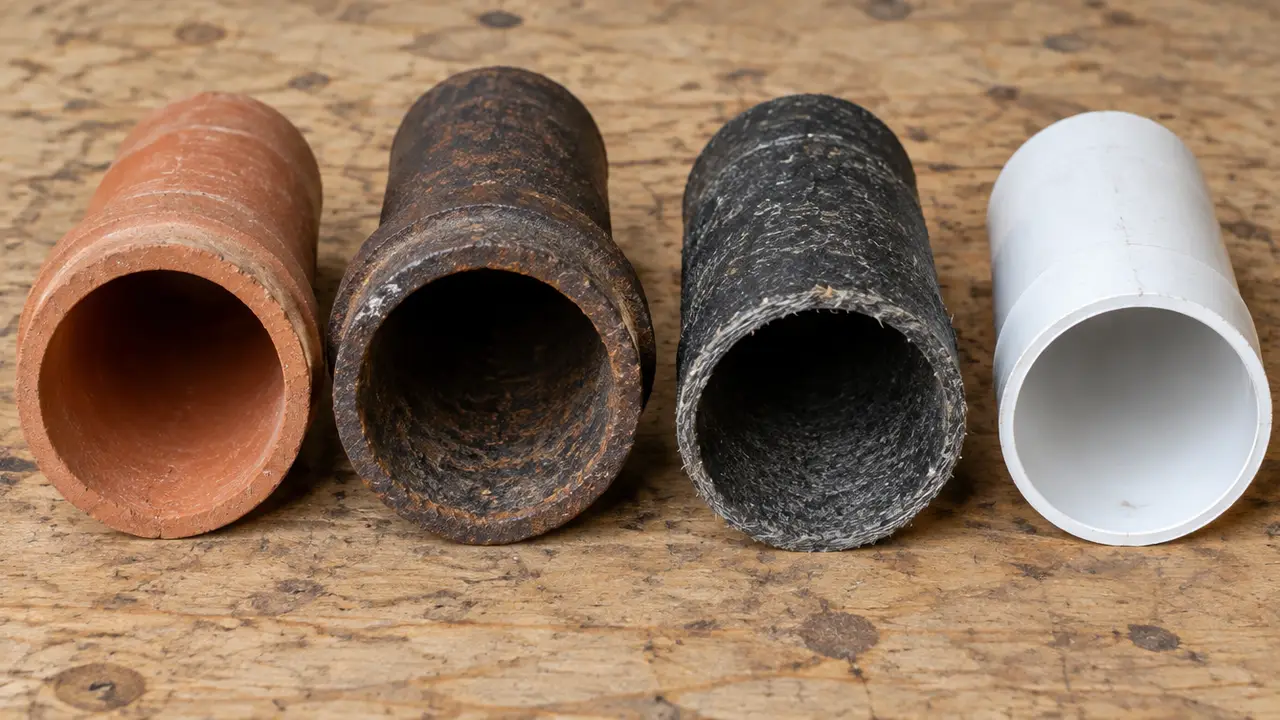
A bursting head works by stretching the pipe outward until it fails. Brittle materials fail by cracking into pieces, which is exactly what the method wants. Ductile materials stretch, fold or tear, which means the head has to do more work, may drag the pipe along with it, or may stop. The PPI handbook notes that in most bursting applications the old pipe is a rigid material such as vitrified clay, cast iron, plain concrete or asbestos-cement, with some plastics also burst.
The EPA's 2006 fact sheet makes the same point from the other side: most existing pipe materials other than HDPE can be burst, but some ductile iron and reinforced concrete can be very difficult. It then lists polyethylene, ductile iron and reinforced concrete among materials for which the method might not be suitable.
02 /How does each host material behave under a bursting head?
| Host material | Where you find it | Behaviour under the head | Typical approach |
|---|---|---|---|
| Vitrified clay (clay tile) | Sewer laterals and mains, especially 1950s to 1970s | Shatters into chips; the easiest common host | Static or pneumatic cone |
| Cast iron | Building sewers, some laterals, older water mains | Cracks, but thick walls and hubs raise the pull needed | Standard cone, heavier equipment |
| Unreinforced concrete | Larger sewers and mains | Cracks; heavy wall | Standard cone, higher force |
| Asbestos-cement | Some water mains and sewers | Brittle, bursts readily | Standard cone; handling precautions at pits |
| Bituminous fibre (Orangeburg) | Mid-century laterals | Soft; often ovalled or blistered; may crush rather than crack | Camera first; bursting often still works if a cable can pass |
| PVC and ABS | Newer laterals and building drains | May stretch around the cone | Blades ahead of the cone or a splitting head |
| Ductile iron and steel | Water mains, some repairs | Does not fracture | Splitting wheels or knives plus expander |
| Reinforced concrete | Large storm and sanitary pipe | Rebar ties the pieces together | Heads that cut reinforcing, if lightly reinforced or badly deteriorated |
| Copper, galvanized steel, lead | Water service lines | Ductile; tears or stretches | Splitting or specialised service-line tools |
| Polyethylene | Newer water services and gas lines | Very tough and flexible | Rarely a bursting host |
The Pipe Bursting Fit Check starts each host at a different score for this reason: clay, cast iron, unreinforced concrete and Orangeburg start at 0, PVC or ABS starts at 1 because plastic may stretch and need a splitting head, and ductile iron or steel starts at 2 because it needs split bursting.
03 /Is clay tile the ideal bursting candidate?
Clay tile is about as good as a host gets. It is hard and brittle, so it shatters into small pieces; it was usually laid in trench backfill that compresses more easily than native ground; and in its typical 100 to 150 mm residential sizes it sits squarely in the range the method was built for. Many of the problems that send clay laterals to replacement, such as root-packed joints, cracked bells and broken pieces, are irrelevant to a burst because the whole pipe is destroyed anyway.
What makes a clay line a poor candidate is almost never the clay. It is a sag, a crushed section the cable cannot pass, an old repair coupling, a tight bend at the foundation, or a gas service laid in the same trench. In Calgary, the City's open data codes about one in five City-side sanitary service lines as TIL, generally read as clay tile; the Calgary page explains what that proxy can and cannot tell you about the private side of your line.
04 /Can cast iron and Orangeburg be burst?
Cast iron bursts well; it is the material the method was invented for. The PPI handbook traces bursting to small cast iron gas mains in the UK in the late 1970s. Heavier walls and bell hubs demand more force, so a cast iron lateral may need a bigger puller than clay of the same size, and heavily scaled pipe benefits from cleaning so a cable can be threaded.
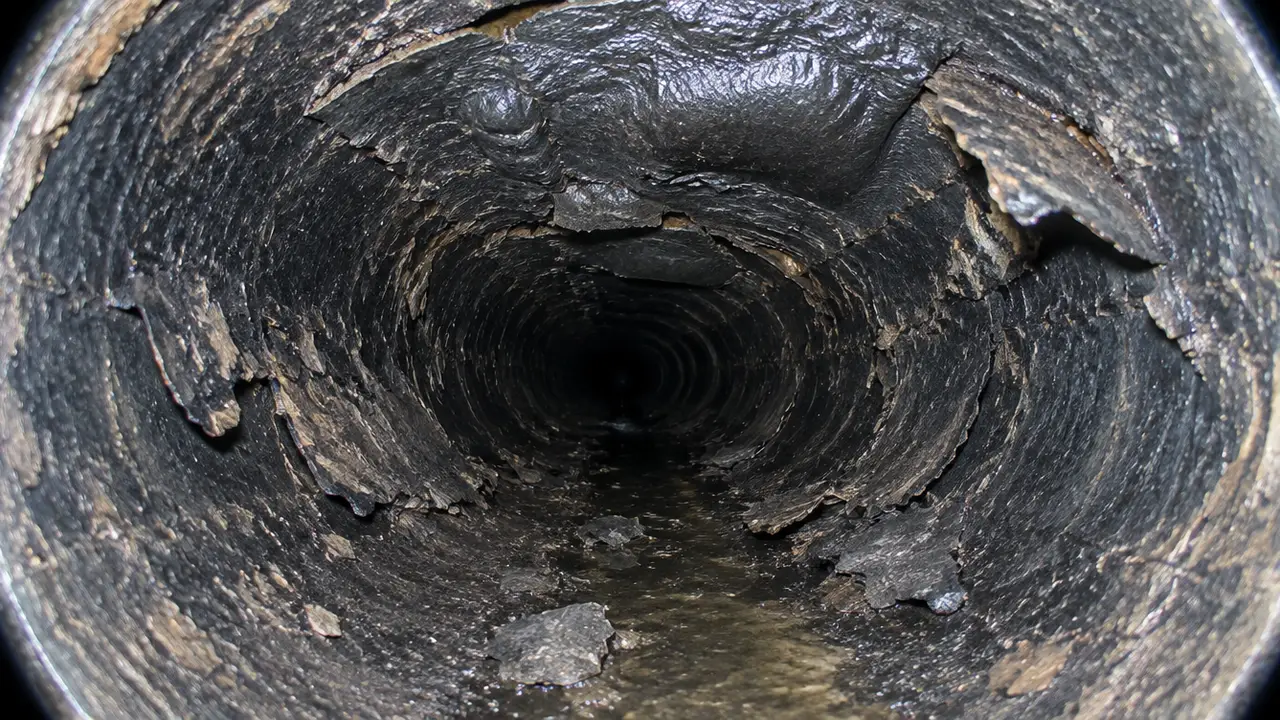
Orangeburg, a bituminous fibre pipe made of wood pulp and pitch, behaves differently. Old Orangeburg has often softened and deformed into an oval or has blistered inside. It tends to fold and crush rather than crack, and a badly collapsed section may not let a cable through at all. When a cable can be threaded, bursting is often still workable because the head simply displaces what is left; when it cannot, a pit at the collapse is the usual answer.
05 /What about plastic, ductile iron and asbestos-cement?
- PVC and ABS. Plastic can stretch and slide around a plain cone instead of cracking. The PPI handbook notes that PVC water mains need multi-blade cutting accessories in front of the head. If a plastic lateral is only a few decades old and round, ask whether bursting is solving the real problem; a sag, an offset joint or a bad connection may be fixable with a single dig.
- Ductile iron and steel. These tear rather than break. The EPA says ductile material is difficult to burst, and the PPI handbook calls pipe splitting the most suitable approach for ductile iron water mains, with the new PE limited to size-on-size or one upsize.
- Asbestos-cement. Mechanically it bursts like any brittle pipe. The fragments stay in the ground, but cutting, breaking or removing exposed sections at the pits can release fibres. Health Canada advises that asbestos-containing materials pose a risk when they are drilled, sawn, broken or otherwise disturbed, and recommends qualified specialists for removal. Ask how exposed pieces will be handled and disposed of under your province's rules.
- Reinforced concrete. The steel holds the pieces together. The PPI handbook reports success where the pipe was lightly reinforced or badly deteriorated, using heads with accessories to cut reinforcing.
06 /Which repairs and fittings stop a bursting head?
Old repairs stop more heads than old pipe. The EPA's implementation steps include cutting or removing impediments before bursting, and it names ductile iron repair couplings, steel repair couplings, valves and thick concrete encasement. Its list of unfavourable conditions adds metallic point repairs that reinforce the pipe with ductile material.
| Obstruction | Why it matters | Usual fix |
|---|---|---|
| Stainless or steel repair clamp | Does not fracture; can wrap the head | Small dig to remove it before the pull |
| Rubber and steel transition coupling | Steel shear band resists the cone | Expose and cut out |
| Concrete encasement or a poured repair | Far stronger than the pipe | Expose and break out, or relocate a pit |
| Short sections of newer PVC spliced into clay | Plastic may stretch where the clay shatters | Blades on the head, or a pit at the splice |
| Cleanout wye or tee along the run | A branch the head will tear through | Service pit to disconnect and remake it |
| Earlier liner in part of the run | Tough, flexible tube inside the host | Ask the installer; often handled with a dig |
Every one of these adds cost, which is why the camera footage should be reviewed with the installer before a price is fixed. The Fit Check adds 2 points for repair clamps or concrete encasement for the same reason. Read what an installer's survey should include before you sign.
07 /How do I find out what my pipe is made of?
A recorded camera inspection is the reliable answer, because it shows the pipe wall, the joints, every change of material and every old repair along the whole run. Build era, the pipe you can see at the cleanout, and municipal records are clues, not proof: a 1960s house may have a clay lateral with a PVC section spliced in after a root repair, or a cast iron building sewer inside and clay outside.
- Look at the exposed pipe where the sewer leaves the foundation or at the main cleanout.
- Check any municipal service-line record; in Calgary the City publishes material for its side of the property line only.
- Book a camera inspection that records the full run to the main, with distances marked.
- Ask the camera operator to call out every material change, repair band and connection by distance.
With that in hand, the Fit Check gives a first read, and a quote request can carry the footage to installers.
FAQQuestions people ask
Can PVC sewer pipe be replaced by bursting?
Yes, often with cutting blades ahead of the cone or a splitting head, because PVC may stretch rather than crack. Confirm the plastic line actually needs replacing first.
Is it safe to burst an asbestos-cement pipe?
Mechanically it bursts well and the fragments stay buried. Any exposed pieces cut or removed at pits need asbestos precautions and proper disposal under provincial rules.
Can a bursting head get through an old repair band?
Rarely. Steel clamps and ductile couplings resist the cone and can wrap around it, so they are normally dug out before the pull.
Does Orangeburg pipe burst or just crush?
It usually crushes and folds rather than cracking cleanly. If a cable can be threaded through, the head can still displace it; a collapsed spot needs a pit.
Can ductile iron water mains be burst?
They are split rather than burst, using cutter wheels or blades, and the PPI handbook suggests limiting polyethylene to size-on-size or one upsize in ductile iron.
Can an HDPE pipe be burst later if it fails?
The EPA lists HDPE as a host that may not suit bursting because it is tough and flexible. Replacement of polyethylene is usually by other methods.
NETWORKGo deeper across the HAUSE Sewer network
Galvanized, Orangeburg and concrete drain pipe: identifying and cleaning them
How to identify and clean galvanized steel, Orangeburg fibre and concrete drain pipe, which methods each can take, and when replacement is the better call.
SewerInspector.caSewer pipe materials by construction era, and what each looks like on camera
Sewer pipe materials by era in Canadian homes: clay, cast iron, Orangeburg, concrete, ABS and PVC, how each one fails and what it looks like on camera.
DrainAugering.caCan a drain snake damage your pipes? Where the real risks are
Can a drain snake damage pipes? How cables and cutters harm old clay, Orangeburg, cast iron, plastic traps, chrome fittings and toilets, and how to avoid it.