A good pipe bursting contractor surveys before pricing: a recorded camera run of the whole line, depth and route, every utility located and nearby crossings identified, soil and groundwater considered, pit locations sketched and old repairs noted. Their quote names the pipe, the head, the pits, the connections and what happens if the head stalls. The warranty should say who covers the pipe, the joints, the connections and settlement.
- The survey is the product you are really buying before any pipe moves; a quote without camera footage is a guess.
- Ask for the pit plan, the new pipe size and DR, the head type and the stall clause in writing.
- Nearby gas, water and power lines should be located through the one-call service and exposed where close.
- A final recorded camera run of the new line is the proof of the job; keep it with the permit and warranty.
- Lifespan figures for HDPE are industry estimates; the warranty and workmanship are what actually protect you.
01 /What should a pipe bursting survey include?
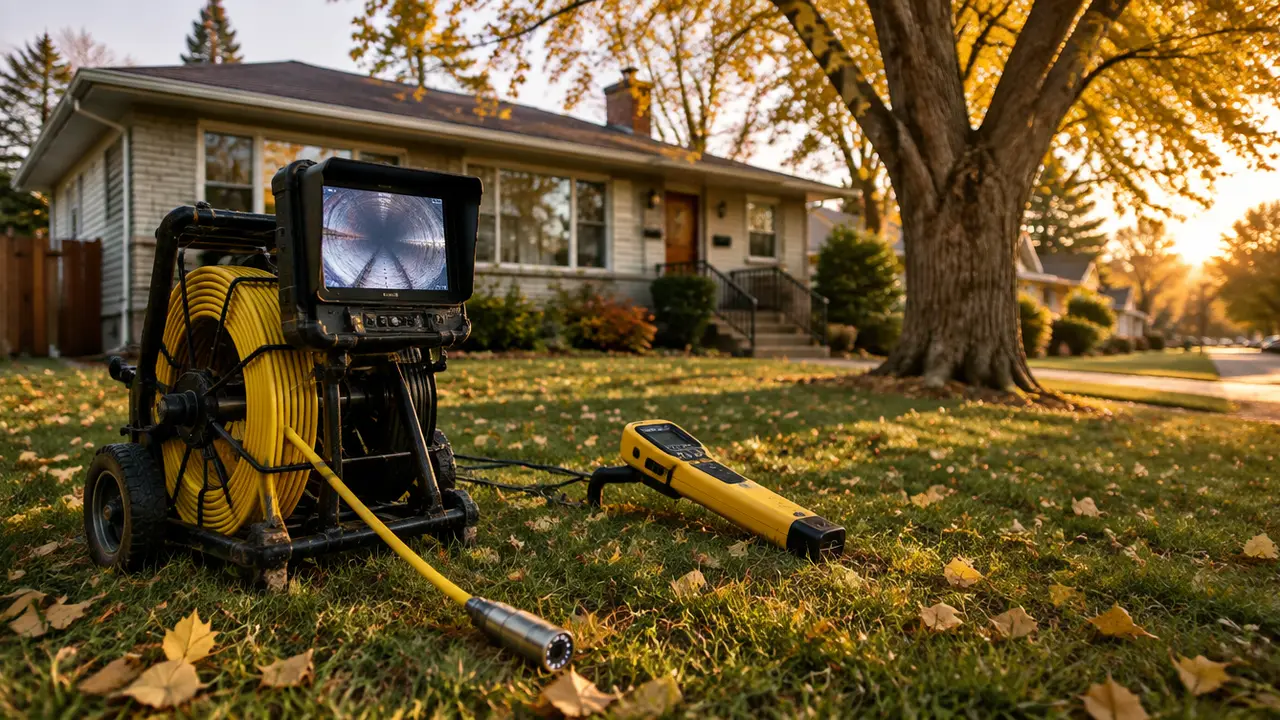
A bursting survey answers one question: can this line be burst safely, and what will it take? The PPI Handbook of Polyethylene Pipe describes the design phase of a public project as collecting the soil and backfill type, current flows for bypass, lateral connections, trench width, backfill compaction and manhole locations, plus nearby utilities and a risk assessment. A residential survey is smaller but covers the same ground.
| Survey item | What it answers | Where it shows up in the job |
|---|---|---|
| Recorded camera run, full length | Material, size, defects, repairs, branches, sags | Head type, obstruction pits, branch pits, grade fixes |
| Sonde locate of route and depth | Where the pipe really runs and how deep | Pit locations, heave risk, shoring |
| One-call locates plus private lines | Gas, water, power, telecom, private feeds | Clearance, hand-exposed crossings |
| Foundation and structure distances | How close the route passes footings, slabs, walls | Static vs pneumatic, upsize limit |
| Soil and groundwater | Compressible or not, wet pits or dry | Force needed, dewatering |
| Surface over each pit and the route | Lawn, concrete, pavers, trees | Restoration cost |
| Lay-down path | Room for the fused string | Run length, staged fusion |
| Ownership and permits | Where the private line ends, what the city requires | Receiving pit, city-side connection, inspection |
02 /Which questions should I ask a pipe bursting contractor?
Ask questions that force specific answers. A contractor who has actually planned your job answers them quickly.
- Where exactly will each pit be, how deep, and what surface does it break?
- What new pipe are you installing: material, outside diameter, dimension ratio and pressure or sewer rating?
- Which head will you use, static, pneumatic or splitting, and why for this pipe and soil?
- What expander diameter will you use, and how much is the line being upsized?
- What did the camera show at each distance, and which items need a dig before the pull?
- How close are gas, water and power lines to the route, and which will you expose?
- How will branches, the house drain and the city-side connection be joined?
- How long will the pipe rest before tie-in, and how will the connections allow for movement?
- What happens, and at what price, if the head stalls or an extra pit is needed?
- Who pulls the permit and books the inspection?
- What exactly does your warranty cover, and for how long?
Also confirm the basics every contractor should have: the business licence your municipality requires, the trade certifications your province requires for plumbing and sewer work, liability insurance, and workers' compensation coverage. Ask for proof rather than assurances.
03 /What are red flags in a pipe bursting quote?
| Red flag | Why it matters | Ask for |
|---|---|---|
| No camera footage behind the price | Obstructions, sags and branches are unknown | A recorded run and a defect list with distances |
| "HDPE" with no size or DR | Pipe choice affects strength and stretch | Outside diameter, DR and rating |
| No pit plan | Pit count drives cost and disruption | A sketch with every pit numbered |
| Promise that bursting will fix a sag | The head generally follows the old grade | The plan for the low spot |
| No mention of locates or crossings | Utility strikes are the most serious bursting risk | Locate tickets and exposure plan |
| No stall clause | Surprise extra pits become disputes | A per-pit price for unplanned digs |
| Restoration left vague | Concrete and pavers can cost more than the pull | Written scope for each surface |
| No final camera run | You cannot see what you paid for | Post-work video of the whole new line |
A quote that is much vaguer than the others is not always dishonest; some contractors price quickly and sort out details on site. But on a bursting job the details are the price. If one installer shows three pits and another shows two, find out why before comparing totals: the first may have spotted a branch or a repair clamp the second missed, or the second may know a head that handles the bend.
Pressure is also a red flag. A failing lateral can be urgent, but a contractor pushing you to sign before you have seen the footage, or discouraging a second opinion, is managing their calendar, not your risk.
04 /What should happen before the first pit is dug?
- Condition record. Photos or video of the foundation, slabs, walks, driveway and any existing cracks. The PPI handbook recommends documenting existing cracks and deficiencies in nearby structures before larger jobs.
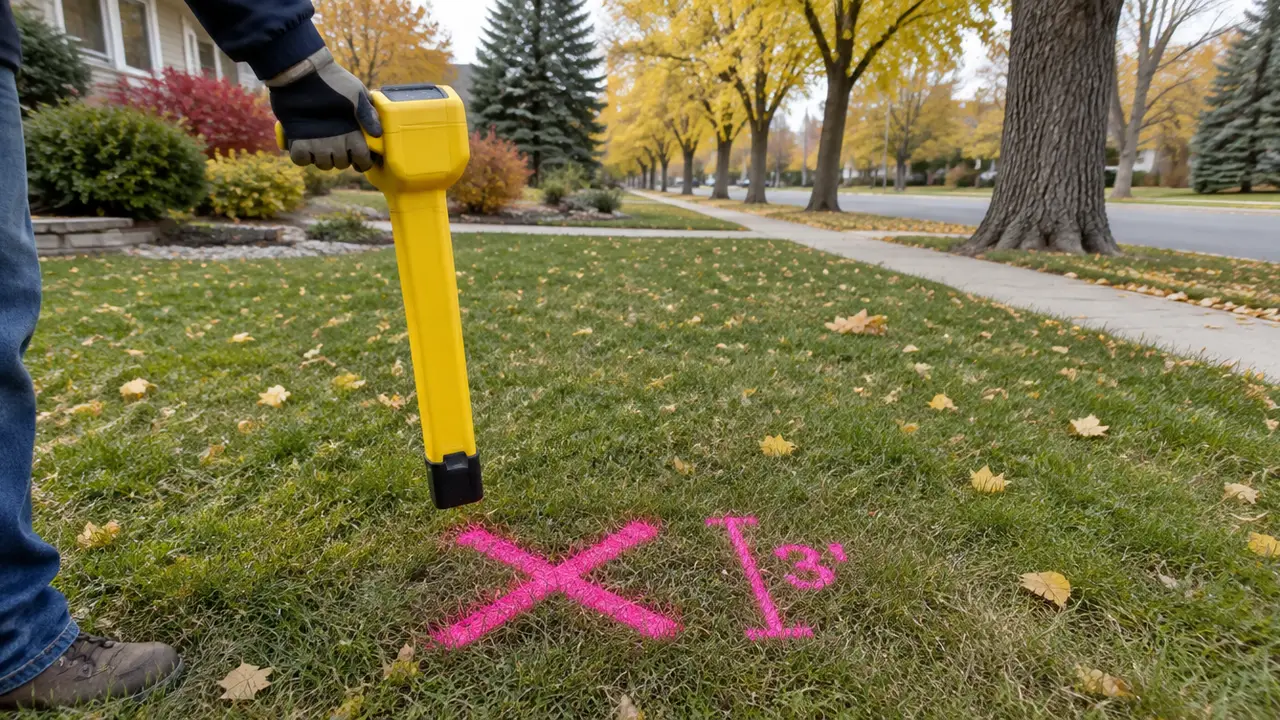
- Locates. In Alberta, Utility Safety Partners asks for at least three full working days' notice for a routine locate request and says you are not clear to excavate until all utilities have been located.
- Permit. Issued and posted, with the inspection booked or bookable.
- Access. Neighbour agreements for shared driveways, lanes or lay-down on their land.
- Communication. When the water will be off, how long pits stay open and how they will be secured.
05 /What should a pipe bursting warranty cover?
Warranties vary widely, and HAUSE does not rank or endorse contractors, so read each one on its own terms. The useful questions are what is covered, what is excluded and who stands behind it.
| Item | What to look for |
|---|---|
| New pipe | Material defects, usually a manufacturer matter, and installation damage such as gouges or kinks |
| Fusion joints | Leaks or separation at fused joints along the string |
| End transitions | Couplings at the house drain and the city side, the most common weak points |
| Branch connections | Saddles, tees or fittings remade at service pits |
| Grade | Whether sags in the new line are covered, and how they are measured |
| Settlement | Sinking over pits after backfill, and who fixes it |
| Restoration | Cracks in new concrete or pavers over pits |
| Transferability | Whether the warranty follows the house to a new owner |
As for how long the pipe itself lasts, the PPI handbook states the polyethylene industry's estimate of a 50 to 100 year service life, conservatively, for properly designed and installed systems. Treat that as the pipe industry's expectation, not a promise about your line. The warranty term, the quality of the connections and a correct grade matter more to you in practice. More on the pipe in HDPE pipe and fusion.
06 /How do I compare two or three bursting quotes fairly?
Make the quotes describe the same job. Give every contractor the same camera footage and ask each to price the same scope: pits, pipe, connections, restoration and permit. Then line them up item by item.
- Count the pits in each plan, and note why any plan has more or fewer.
- Compare pipe size, DR and upsizing.
- Compare what is included at the city-side connection.
- Compare restoration scope surface by surface.
- Compare the per-pit price for unplanned digs.
- Compare warranty terms, not just length.
Screen your line first with the Pipe Bursting Fit Check, check the planning numbers on pipe bursting cost, and read risks and problems so you know what the contingency plan should cover. HAUSE is an independent information and quote-request network, not a contractor; when you are ready, send your footage and details and the desk will reply with next steps.
FAQQuestions people ask
What should I ask a pipe bursting company before hiring?
Ask for the pit plan, pipe size and DR, head type, how nearby utilities will be exposed, what happens if the head stalls, who pulls the permit, and what the warranty covers.
Do I need my own camera inspection before getting bursting quotes?
It helps. Giving every contractor the same recorded footage makes quotes comparable, although most bursting installers will also run their own camera.
Is a cheaper bursting quote a warning sign?
Not by itself. Check whether it includes the same pits, pipe, connections, restoration and permit. Missing scope, not price, is usually the problem.
Should the contractor give me a video of the new line?
Yes. A recorded camera run of the finished line, including both end connections, is the standard proof of a burst and belongs with your warranty.
Can I get a second opinion on a pipe bursting quote?
Yes, and it is sensible on a five-figure job. Share the footage and the quote with another installer, or send them to the HAUSE desk for a read.
NETWORKGo deeper across the HAUSE Sewer network
What to expect on a hydro jetting visit, from arrival to camera proof
What to expect on a hydro jetting visit: access, camera inspection, nozzle choice, jetting passes, clean-up, the proof you should get and how to prepare.
SewerQuotes.comIs trenchless sewer repair worth it? Lifespan, cost and when it fails
Is trenchless sewer repair worth it? How long lining and bursting last, when trenchless beats digging on cost, and the pipe conditions where it fails.
DrainAugering.caDrain auger safety: how rotating cable injures, and how to stop it
Drain auger safety: how rotating cable injures hands and arms, the right gloves, foot pedal control, electrical and sewer gas hazards, and hard stop rules.