On sewer mains and larger private lines, bursting usually runs manhole to manhole, with flow bypassed around the section, every service located and reconnected, and the new pipe tied into rebuilt or repaired manholes. Commercial and multi-unit buildings add business hours, shared ownership and traffic control. The method is the same as on a house lateral; the planning, bypass and connections are what grow.
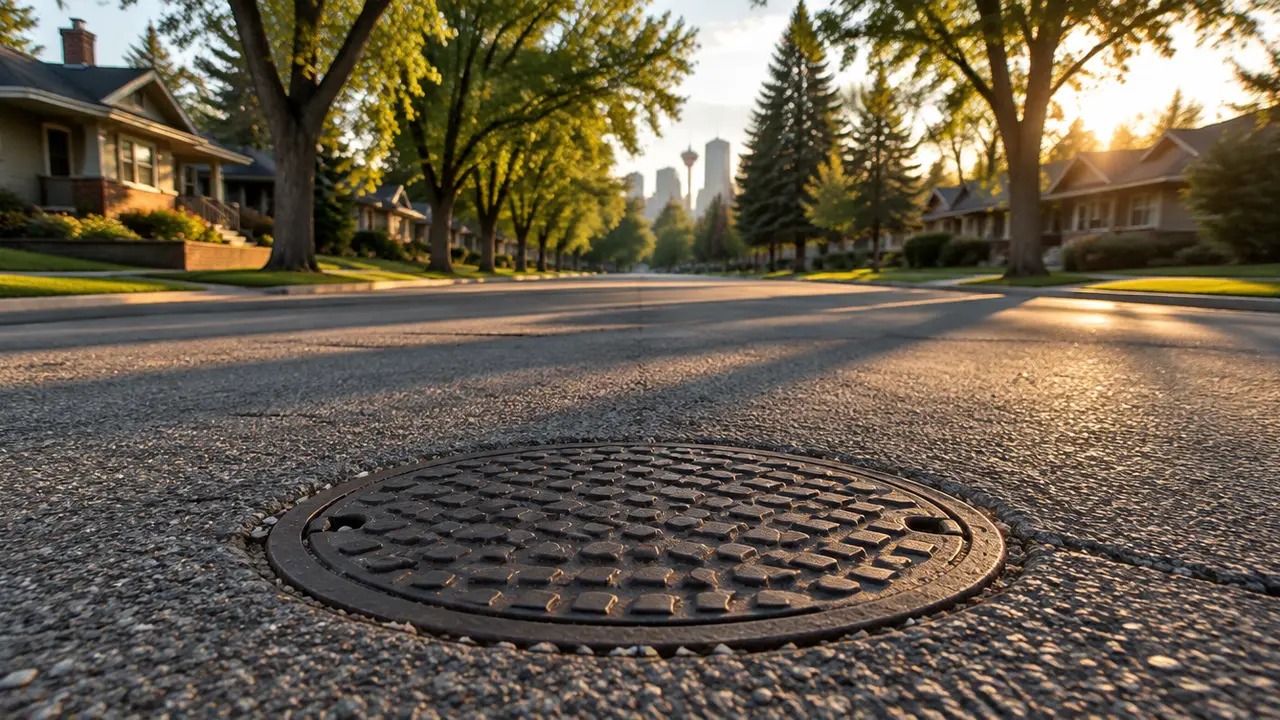
- Mains are typically burst between manholes, often using the manhole locations as pits and replacing worn manholes at the same time.
- Flow must be bypassed or diverted while a section is open, which on a busy main means pumps, backup pumps and a spill plan.
- Each service or lateral along the main is exposed and reconnected, which is why connection count drives cost.
- Industry difficulty classes combine depth, diameter, upsize, run length, trench width and soil.
- Multi-unit and commercial owners need a schedule that keeps drains usable, a notice plan for occupants and clear authority to approve the work.
01 /How is a sewer main burst?
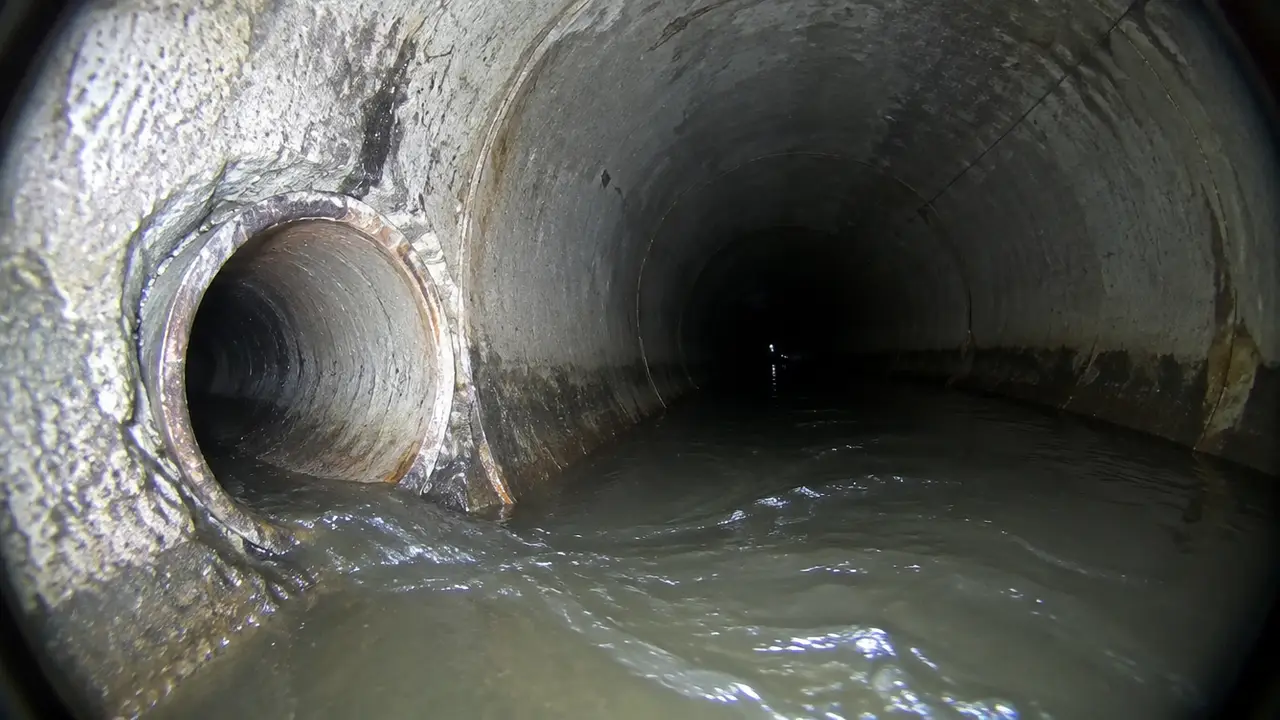
A sewer main is usually replaced one manhole-to-manhole reach at a time. The EPA's 2006 fact sheet lists the general steps: gather the pipe's history and inspect it by closed-circuit TV, install the bypass, build any access pits, disconnect services, remove impediments, burst the old pipe and pull in the new one, pressure-test, tie in to the system, reconnect services and remove the bypass. Ground-penetrating radar may be used to find utilities missing from records.
The PPI Handbook of Polyethylene Pipe recommends planning pits at manholes or lateral connections, launching in two directions from one pit where possible, and replacing badly deteriorated manholes and using their locations as pits. New manholes connect to polyethylene with flexible rubber boots; old manholes that stay in service are sealed around the new pipe with expanding grout and other methods that allow movement.
Some systems avoid pits entirely. The EPA fact sheet describes manhole-to-manhole bursting that works from existing manholes and drill-assisted systems that launch from the surface and recover the head through a manhole.
02 /How is sewage handled while the main is open?
With a bypass. The PPI handbook says a gravity bypass must pump the full upstream flow and discharge it to a manhole below the section being burst, with emergency backup pumps so service is never interrupted. Upstream plugs should be braced and preferably inflated and deflated remotely, and crews working in live sewers need confined-space training and equipment.
- Flow measurement. Peak flows are measured or estimated before sizing pumps; the bypass plan belongs in the contract documents.
- Hoses and crossings. Bypass lines crossing driveways and roads need ramps or buried crossings and traffic control.
- Spill response. A plan for pump failure, a burst hose or a storm surge.
- Services. Laterals entering the section are either bypassed individually or asked to limit use for a short window.
03 /How are services reconnected to a burst main?
Every service is located, exposed and reconnected. The PPI handbook says standard practice is to locate and expose services before bursting; the camera inspection of the old main normally shows where sewer services join. After the pull, a window is cut into the new polyethylene at each service and a fitting connects the lateral.
| Connection type | How it works | Notes |
|---|---|---|
| Compression-fit tee | A hub with a rubber sleeve and stainless band pressed into a cored hole in the main | Needs no special tooling |
| Fused lateral | A polyethylene lateral fused directly to the main with curved heating tools | Needs a highly skilled fusion technician in a cramped pit |
| Electrofusion saddle | A saddle with embedded heating wires fused onto the main over the opening | Surfaces must be very clean |
| Strap-on saddle | A rubber-lined saddle clamped around the main with a stainless strap | Mechanical, quick to install |
Because each connection is an excavation, a street with a service every few metres adds up quickly. The handbook notes bursting is most cost-advantageous over lining when there are few lateral connections to reconnect within a section.
04 /What makes a larger bursting project routine or difficult?
The PPI handbook summarizes a NASSCO classification of bursting projects into three classes by difficulty. The criteria combine depth, existing diameter, upsize, burst length, trench width compared with the upsized diameter, and soil compressibility, and difficulty rises as more than one criterion applies.
| Criterion | A: routine | B: moderately difficult to challenging | C: challenging to extremely challenging |
|---|---|---|---|
| Depth | Less than 12 ft (3.7 m) | 12 to 18 ft (3.7 to 5.5 m) | More than 18 ft (5.5 m) |
| Existing diameter | 4 to 12 in | 12 to 20 in | 20 to 36 in |
| Upsize | Size for size or one size | Two sizes | Three or more sizes |
| Burst length | Under 350 ft (107 m) | 350 to 450 ft (107 to 137 m) | Over 450 ft (137 m) |
| Soil outside the trench | Compressible | Moderately compressible | Incompressible |
For class C work, the handbook advises careful analysis of forces and ground movement, and a pre-construction survey and movement monitoring of nearby structures. The Pipe Bursting Fit Check is built for residential screening and treats depth over about 3 m as an added difficulty, which lines up with the routine-class boundary.
05 /What is different about commercial and multi-unit buildings?
A private building sewer serving a strip mall, apartment block or condominium is bursting at a scale between a house lateral and a municipal main. The pipe is often larger, the building cannot stop using water for long, and several parties have a say.
- Authority. A condominium board, property manager or landlord needs to approve the work and the budget; tenants and owners need notice.
- Schedule. Pulls are timed for low-use hours; restaurants and laundries may need to close or divert for a shift.
- Multiple services. Stacks and branch sewers joining the building sewer each need a connection pit or an interior reconnection.
- Grease and solids. Food-service lines should be cleaned before the camera survey, and the reconnection plan should respect any grease interceptor.
- Access and traffic. Parking lots, fire lanes and loading docks may need staged closures.
- Records. Before-and-after video with distances, as-built drawings and the permit file belong with the building's maintenance records.
Permits, approved materials and who may connect to the municipal system differ between cities, so the installer and owner should confirm them early.
Condominium corporations have an extra step: deciding whether the building sewer is common property and how the cost is shared. That is set by the corporation's own documents and provincial condominium law, not by the contractor, so boards usually confirm it before approving a bursting contract. For rental buildings, landlords should plan notice to tenants for any period when drains or water will be unavailable, following the notice rules in their province.
06 /How are larger bursting jobs priced and bid?
Larger jobs are priced by item, not as a single lump sum. The PPI handbook reproduces a sample bid form in which bursting is measured per linear foot by reach and depth, lateral connections are separate items priced each and grouped by depth, cleaning with pre- and post-work CCTV is its own item, and bypass pumping, traffic control, manholes and surface restoration are separate lines. That structure lets owners compare bids fairly and settle changes by unit price.
The EPA fact sheet lists what drives cost: diameter and material of both pipes, length, removal of fragments, pipe defects, depth and grade changes, manhole locations, extra access pits, utilities to avoid, bypass provisions, the number of service connections, direction changes at manholes and ground conditions. It also notes that the pipe must be taken out of service while it is burst.
Residential planning ranges are on pipe bursting cost; commercial and municipal work is priced from site-specific quantities. Water main work is covered in bursting water lines, and the survey any owner should expect is in what an installer's survey includes. For a building sewer, you can send the camera report.
FAQQuestions people ask
Can a condo or apartment sewer be replaced by bursting?
Often, if the building sewer runs outside the structure with room for pits. Lines under the building usually need lining or interior excavation instead.
Do businesses have to close for sewer main bursting?
Usually not for long. Flow is bypassed, and individual services are disconnected only while their connection is remade.
Why are manholes replaced during main bursting?
Old manholes on an old main are often deteriorated, and replacing them lets their locations serve as launch or receiving pits with fresh, sealed connections.
How long a run can be burst on a sewer main?
The EPA puts the most appropriate single run at about 230 m, with straight pulls over 300 m completed. Friction and pipe lay-down space set the practical limit.
Who designs a municipal pipe bursting project?
The owner's engineer usually designs it and sets pit locations and specifications, and the contractor finalises the layout through submittals.
NETWORKGo deeper across the HAUSE Sewer network
Sewer line replacement cost by city: why local quotes differ
Sewer line replacement cost by city: why Calgary, Edmonton, Regina and other Canadian markets quote differently, GST/HST by province, and local drivers.
SewerJetting.caCommercial and municipal sewer jetting: combination trucks, interceptors and schedules
Commercial sewer jetting explained: jet-vac combination trucks, high-flow mains cleaning, restaurant grease lines, interceptors and confined space rules.
SewerInspector.caCondo and multi-unit sewer inspections: who scopes what
Condo and multi-unit sewer inspections: shared vs unit piping, what boards should scope, what buyers should ask for, and access in occupied buildings.