A typical house lateral burst takes one to three working days on site after the permit and utility locates are in place. Day one opens the pits and disconnects the ends; day two fuses and pulls the new pipe, lets it rest, reconnects both ends and records a camera run; backfill and restoration finish the job. Water use in the house is paused only while the line is open.
- The preparation, not the pull, sets the timeline: camera survey, permit, locates and a pit plan come first.
- In many cities the lateral is split at the property line, and the private and municipal sides may be owned, permitted and replaced differently.
- Most laterals burst from a pit near the foundation to a pit near the property line or main, with extra pits only for branches, bends or obstructions.
- You will usually be asked not to run water for part of a day while the line is disconnected.
- A recorded camera run of the finished line, with the permit inspection, is what closes the job.
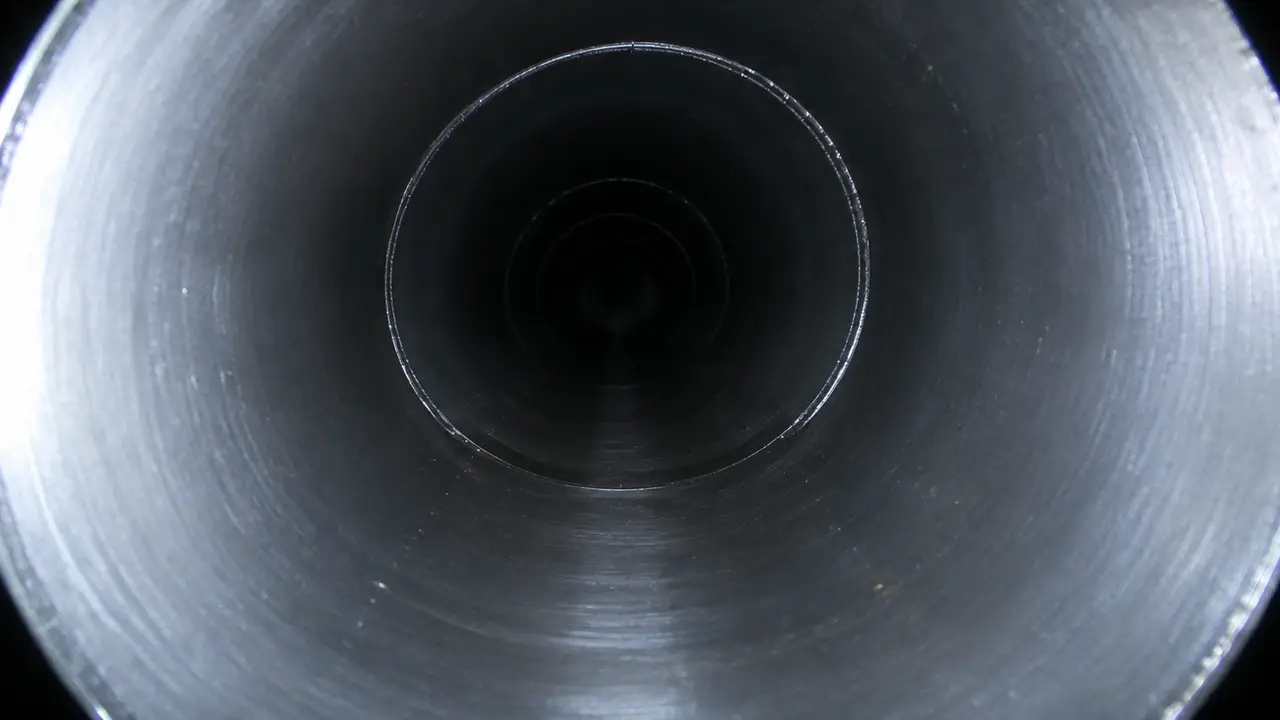
01 /Which part of the sewer lateral is mine to replace?
In many Canadian municipalities, the sanitary service is split at the property line: the municipality owns the pipe from the main to the property line and the owner owns the rest, up to and through the foundation. The City of Calgary describes its service lines exactly this way in its open data. Other municipalities draw the line differently, some at a curb box or the main itself, so confirm with yours before planning; in Calgary, call 311.
The split matters because it decides where your receiving pit goes and who connects to what. If the municipal side is also failing, some cities replace it at the same time, some require their own crews or approved contractors, and some leave it. Calgary's page on service connections says only pre-qualified, indemnified contractors may install connections; confirm through 311 how that applies to a replacement on your street.
02 /What happens before the crew arrives?
- Camera survey
A recorded run from the cleanout to the main identifies material, depth, bends, branches, repairs and any sag. This is the document the quote is built on.
- Quote and pit plan
The installer sketches pit locations, states the new pipe size and DR, and says what happens if an extra pit is needed.
- Permit
A plumbing or sewer permit is usually required for lateral replacement; the installer typically pulls it. Ask your municipality what applies.
- Locates
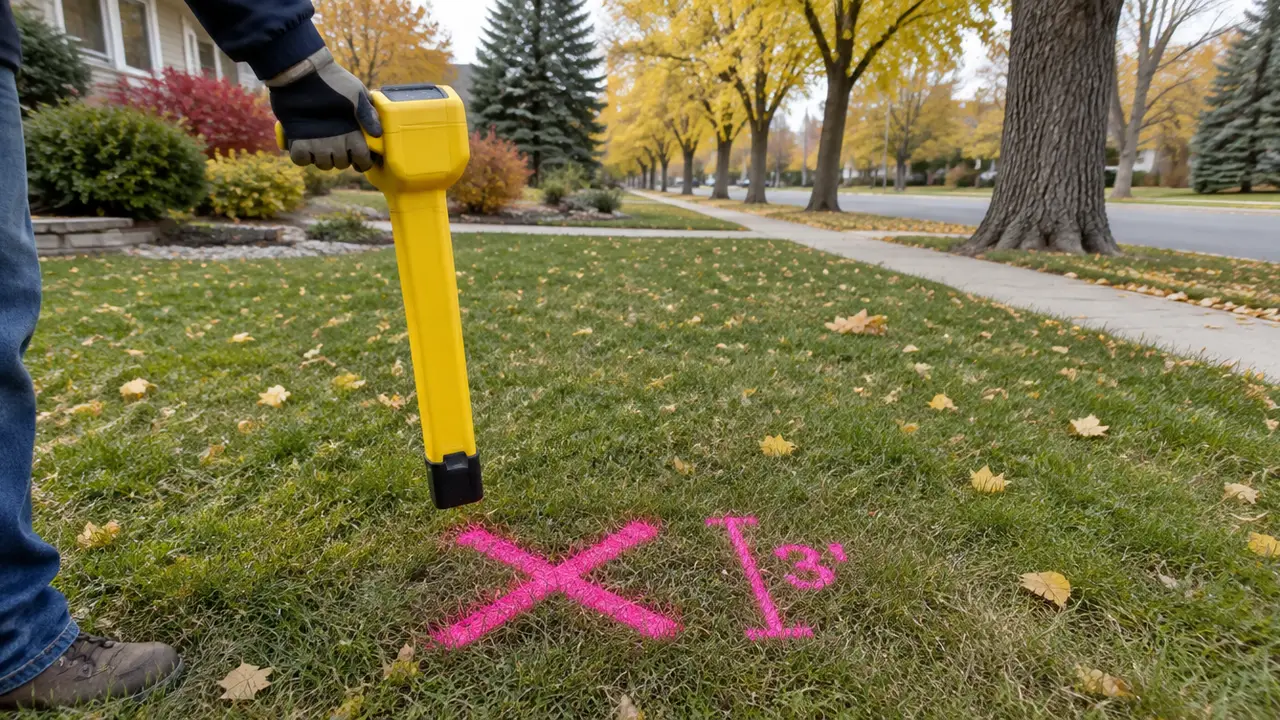
The one-call service is notified. Utility Safety Partners in Alberta asks for at least three full working days' notice for a routine request.
- Neighbours and access
If the lay-down path, a pit or equipment crosses a shared driveway or lane, arrangements are made in advance.
- Inside the house
Clear access to the cleanout and the area where the sewer leaves the foundation; move stored items away from the wall.
If you have not screened the line yet, the Pipe Bursting Fit Check takes a minute and tells you what the camera needs to confirm.
03 /What happens on the first day?
Day one is digging and disconnecting. Locate marks are checked, any service crossing the route is exposed by hand or vacuum, and the launch and receiving pits are excavated and shored as depth requires. The old pipe is exposed at each end and cut.
- Launch pit. Usually outside the foundation where the sewer exits, or at an existing exterior cleanout, sized for the new pipe to slope in.
- Receiving pit. Near the property line or at the city-side connection, sized for the puller and a thrust plate.
- Branch pits. If a garage, suite or second building ties into the lateral, each junction is exposed and disconnected.
- Obstructions. Repair bands or encasement found on camera are dug out now.
- Fusion. On many jobs the HDPE string is fused on day one so it is ready and can cool and be inspected.
04 /What happens on the day of the pull?
The cable or rod string is threaded through the old pipe from the receiving pit, the head and new pipe are connected in the launch pit, and the pull begins. On a short residential run the pull itself is usually the quickest part of the job. The EPA's fact sheet gives a typical bursting rate of about 30 m per hour, which puts a whole lateral in the range of an hour or less once everything is ready.
- The head arrives in the receiving pit and is disconnected from the new pipe.
- The pipe end is inspected for gouges; the PPI handbook rejects defects deeper than 10 percent of the wall.
- The new pipe rests so it can recover from stretch and settle to ground temperature before the ends are cut to length.
- Each end is joined to the existing building drain and the city side with transition couplings or fittings suited to the two materials.
- Branch connections are remade at their pits with saddles, fusion fittings or approved couplings.
- A recorded camera run checks the new line, the joints and the transitions, and a test is done if the permit requires one.
- The municipal inspector, where required, looks at the connections before backfill.
If the camera shows standing water, a step at a coupling or a gouge near a pit, this is the moment to raise it, while the pits are still open.
05 /What happens after the pull?
Pits are backfilled in compacted layers and the surface is restored, either by the bursting crew or by a separate trade depending on the contract. Sod and soil are quick; concrete, pavers and asphalt may follow days or weeks later. Pit backfill can settle, especially over the first winter, so a small top-up in spring is normal.
| Stage | Typical timing | What you should receive |
|---|---|---|
| Camera survey and quote | Days to a couple of weeks | Video, defect list with distances, pit sketch, written quote |
| Permit and locates | Several working days | Permit number; locate tickets and marks |
| Pits and disconnection | Day 1 | Pits shored as needed; exposed services |
| Pull and reconnection | Day 1 or 2 | Camera footage of the new line |
| Inspection and backfill | Day 2 or 3 | Inspection record where required |
| Surface restoration | Same week to later | Restoration as written in the contract |
Timing stretches with frozen ground, extra pits, a municipal-side connection in the road, or inspections that need booking. See pipe bursting cost for how each of those shows up in price.
06 /What does a homeowner need to do during the job?
Not much, but a few things make the job smoother and protect you. Most of them are about access, water use and keeping records.
| When | What to do |
|---|---|
| Before | Photograph the foundation, driveway, walks and existing cracks; mark sprinkler lines and invisible pet fences |
| Before | Clear space around the interior cleanout and where the sewer leaves the foundation |
| Before | Tell tenants or suite occupants when drains will be unavailable |
| During | Stop all water use when asked, including appliances on timers |
| During | Keep children and pets away from open pits and equipment |
| After | Get the camera video of the new line and the inspection result |
| After | Watch pit areas for settling after rain and through the first winter |
If something looks different from the plan, such as a pit where none was shown or a pit that has grown much larger, ask before the work continues. It is far easier to agree on a change with the pit open than afterward.
07 /Can a lateral be burst under the house or a slab?
Rarely, and usually not wisely. Bursting a building drain under a basement floor means pits inside the house, a short run with little room for the new pipe to slope in, and outward soil movement directly under a slab. Most installers stop the burst outside the foundation and handle the section under the house by lining or by opening the floor.
The same caution applies to a lateral that runs under an attached garage slab, a deck footing or a porch. The EPA lists ground heave with shallow pipes among bursting's disadvantages; the fix is often a short open-cut or lined section right at the structure. Read more in risks and problems, and see how bursting and lining split the work in bursting vs lining.
When you have camera footage, send it with a quote request so installers can price the same run.
FAQQuestions people ask
How long does it take to burst a house sewer lateral?
Usually one to three working days on site once the permit and locates are done. The pull itself is often under an hour; pits, reconnection and inspection take the rest.
Can I stay in the house during sewer lateral bursting?
Yes. You will lose use of the drains for part of a day while the line is disconnected, and there will be equipment noise outside.
Do I need a permit to burst my sewer lateral?
Lateral replacement generally requires a plumbing or sewer permit, and work on the municipal side has its own rules. Confirm with your municipality; in Calgary, call 311.
Where are the pits for a residential sewer burst usually dug?
One near the foundation where the sewer exits and one near the property line or the city connection, plus one at any branch, sharp bend or obstruction.
Should a cleanout be added when the lateral is burst?
It is a good moment to add or upgrade an exterior or interior cleanout, since the pipe is exposed at the pits. Ask what your municipality requires.
NETWORKGo deeper across the HAUSE Sewer network
How to prevent sewer backup in your basement: a layered plan
How to prevent sewer backup in a basement: keep your lateral clear, maintain a backwater valve, disconnect downspouts, manage weeping tile, plan for storms.
SewerRoots.caWhose tree, whose pipe: who pays when roots block a sewer line
Who is responsible when a city or neighbour's tree sends roots into your sewer line: the general Canadian pattern, the evidence, and how to raise it.
SewerQuotes.comSewer permits, inspections and who pays: owner or city?
Sewer line permits and who pays in Canada: the usual owner vs city split, permit and inspection costs, road cuts, city tree roots and what to confirm.